There were forests here once. But they have long given way to moorland and bracken fringed cliffs. The trees that remain are short, stoic and normally solitary. Sometimes hawthorns gather in twos and threes, heads bowed in hushed conversation at crumbling field boundaries; and there are the banks of jagged blackthorn which arc over muddy pathways creating dark tunnels scented with almonds in the spring; and the covens of elder who stretch their riven limbs into the bridlepaths of the eastern valley— but mostly the flora huddles close to the ground, crouched against the wind. That is what gives this place its magic. I, like so many others, came here for the thrill of expansive seas and skies… but sometimes… I long for the deep green weight of the woodland. It is a primal need which awakens in Autumn. And when it does I go searching for echoes of the forest that still lurk in the corners here and there— wrapped in mosses and lichens, wedged in granite and overhung by ivy—forgotten in the folds between moorland, cliff and sea.
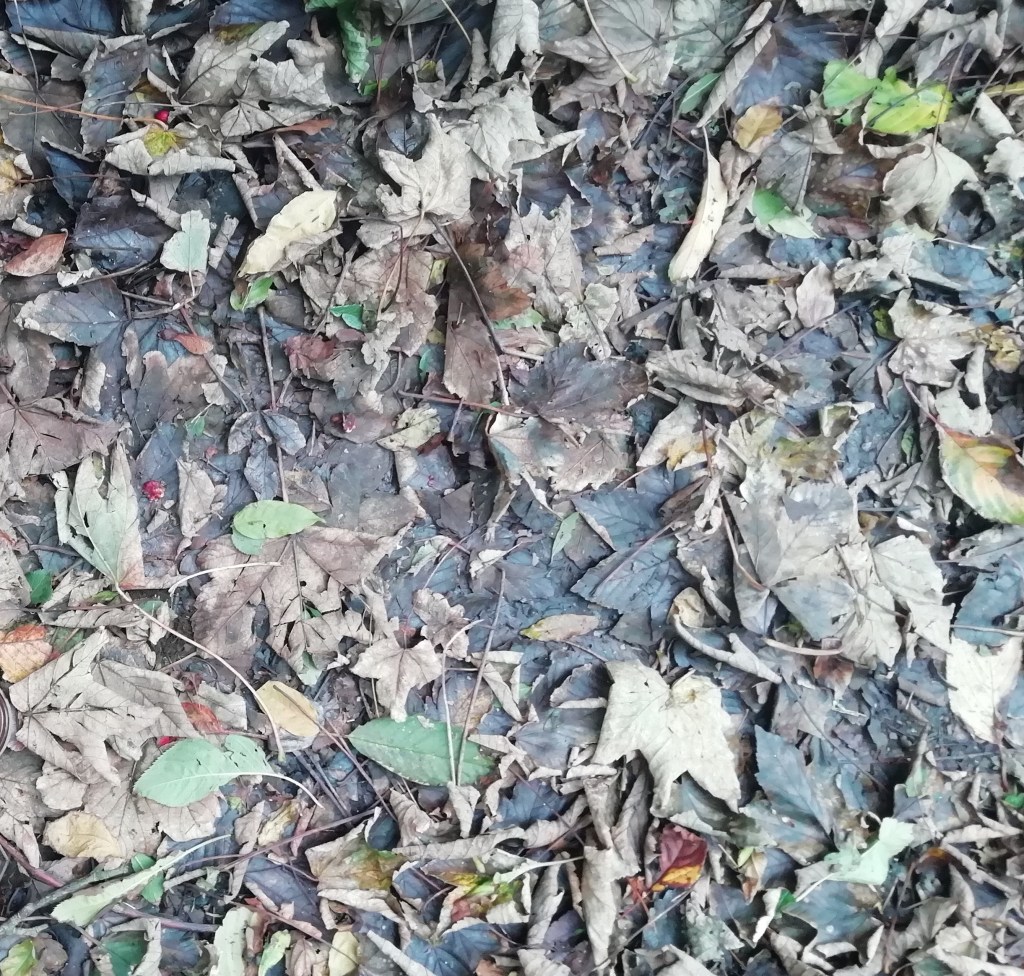
Both the valleys hold echoes. Behind the main road in the western valley, tending hands of valley-dwellers have created an uncharacteristic, lofty canopy of foliage that trembles beneath the autumn breeze. This is the garden valley, where scots pines rise above ragged sycamore and the unearthly blue foliage of eucalyptus trees shifts in thick whispers above the curled trunks of hawthorn. The path I walk skirts behind glossy rhododendron hedges, providing brief glimpses of a patchwork of trees dropping down to my left. The colours are not the electric reds and oranges of imagined autumns, the valley ripples with browns and yellowing greens. Nor are the leaves that coat the path the crisp, kickable sort. Instead, they clump together softly, clinging to my boots, slowing me down. Everything here slows me down. The vaulted tree-formed space cuts us off, plant and animal, from all movement and light beyond. Time relaxes. I breathe in the rich sweetness of decomposition and study a riddled sycamore leaf trapped in a cobweb while above me a continuous rush of sound courses through the treetops, the last gasps of sky-kissed leaves.
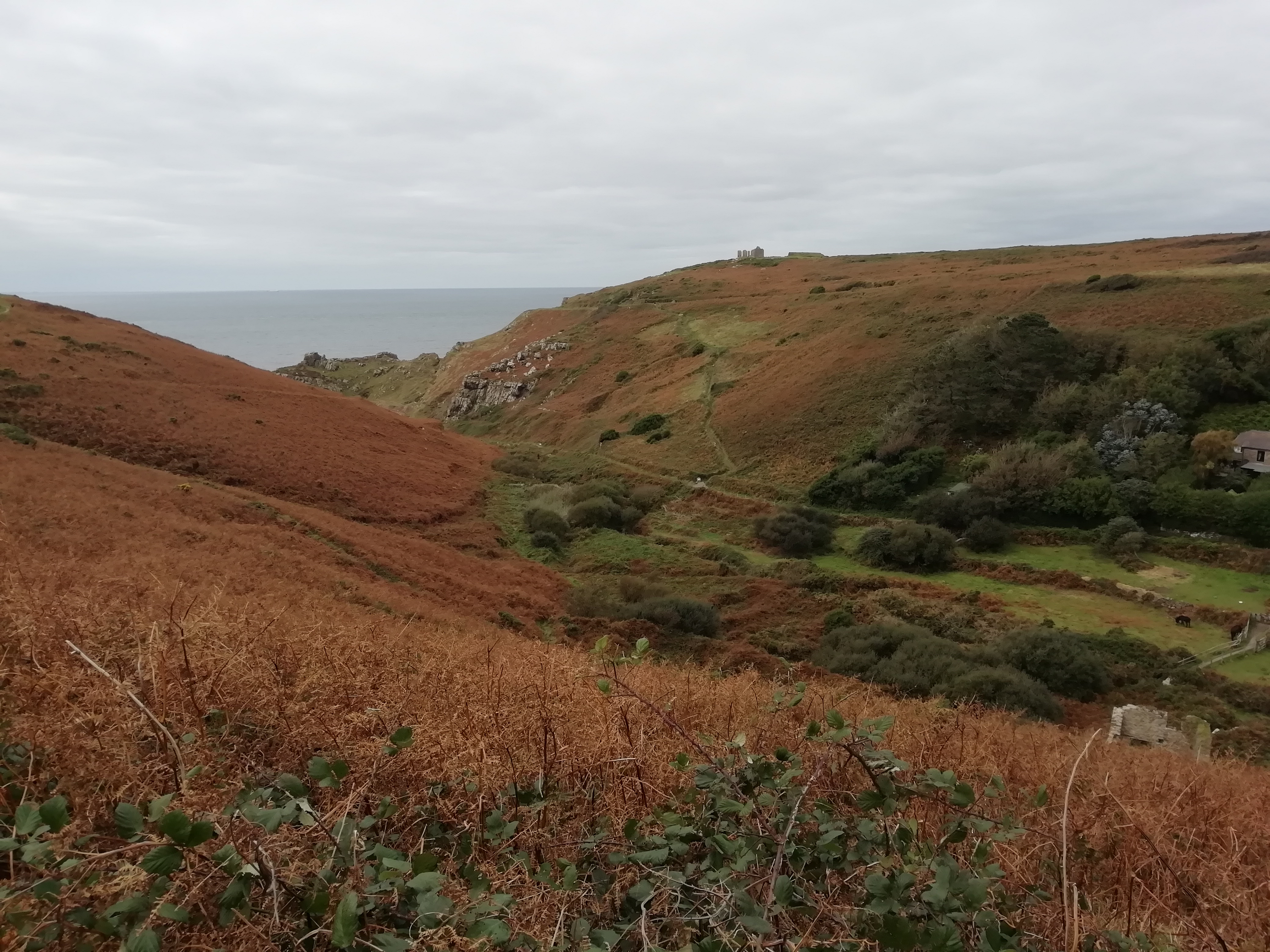
In stark contrast, the eastern valley is vivid red and wide open but it still holds its woodland memories— it shows the marks of age more readily, its lost landscapes are more visible. There is no whispering canopy here, only the mounded goat willow which folds over the white watered stream far below. I know that beneath that willow there is an oasis of shade, a patch of that same damp, brown sweetness that pervades the woodlands, but I do not need to go down. I stay up here where the colours are as bright as they were muted in the garden valley; the white lichen in the granite hedgerow glows luminous above wide swathes of rust coloured bracken. Sound is not contained here. It is divided. On my left, the sound of the sea’s steady breathing rushes up from the base of the cliffs. On my right, there is relative silence, broken only now and again by the restless moans of jackdaws. I walk between the two, stillness and movement, like a tight-rope walker.
Above the sea I watch the birds. A blackbird picks at some wrinkled haws and a kestrel looms up, wings outstretched, surrendered to a rising thermal. Three finches bob past like small stones skimming the air. Their round bodies bounce on a blur of wings as they fling themselves out into nothingness, beyond the brink of land. They remind me of my own children as they tumble out of school each afternoon, barely able to contain their energy, revelling in the joy of movement, of air and height.
I think of leaves falling into the brown, time-stilled shade of woodlands while I watch fluttering bodies tumble upwards into slate grey skies.
From the corner of my eye I catch the oily flash of a magpie looping up momentarily from the red bracken. I wait and am rewarded. Another magpie swoops down into the brush. Two for joy. This is a day for pairs. A paired day in a paired season—shade and light; earth and sky; sound and silence. It is how October always makes me feel— both lost and found. And that is, in a strange way, quite joyful.
 Laurie Huggett
Leave a comment