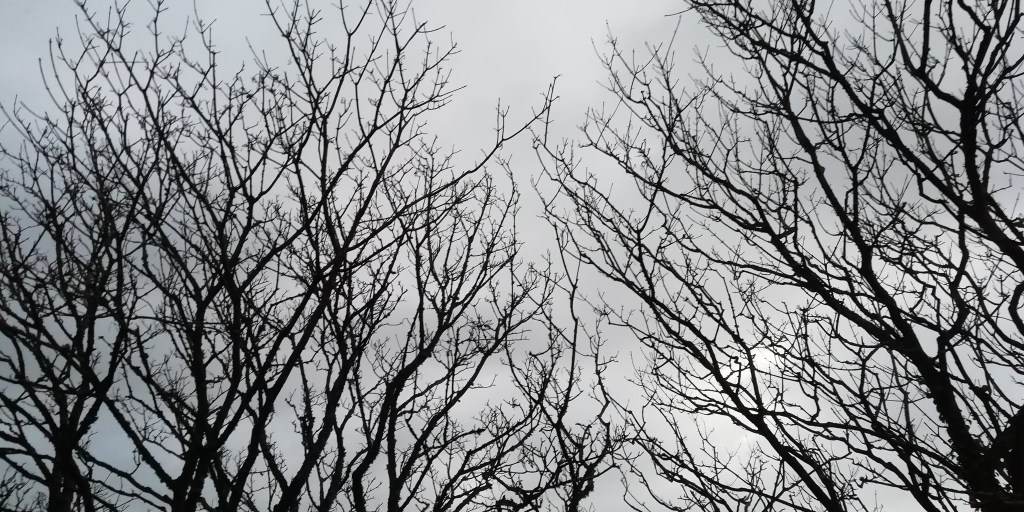
Popping to the shops after school is an adventure all of its own in November. Coats must be worn—against the mizzle more than the cold— and (unnecessary) torches are eagerly dug out of sock drawers before we set off on the three-minute-walk there. The streetlights on the square are Narnian and windows glow orange, puncturing the silhouetted streets. We pretend not to peer into them as we turn our collars up against the wind.
Now is that strange time when, just as the distinction between outside and inside becomes more palpable, the boundaries between day and night become more permeable. 5pm is now a mysterious hour full of new potential: a barn owl might drift silently past the open doors of the Post Office; a fox might turn its ears to the creak of the swings in the play park.
Small ones feel this most acutely. After all, evenings are something you yearn for when you are little. Long evenings are delicious, a chance to quietly inhabit the darkness as adults do. But the children know, as we do, that the twinkling human darkness is only exciting because it shelters them from a wilder darkness beyond.
On Sunday we wander towards the cliffs where the twilight is untroubled by streetlights or inviting windows. Without artificial light (torches are safely pocketed) little bodies race across the fields, exploring the luminescence of this deep half-darkness. Little hands reach for gorse flowers that glow strangely against black masses of thorns. The chocolate-coloured fields cast unfamiliar shadows between their furrows; they tangle together, leaning at odd angles, directionless without the sun and before the moon. The blue of the sky slips beneath the horizon where we count the pricks of light marking distant ships. They appear before the stars. Small eyes squint to identify them and we imagine ourselves aboard, sharing our delirious visions of lurching, salt-laden nights, hauling nets and tracing charts by moonlight.
As we head into the valley the darkness deepens slowly. It is only when we turn to look at the sea—tremoring with the last of the light— that we realise how little of the hedgerows will be recognizable soon. The smallest one senses the edges of the darkness creeping closer. She feels it coming with all its stories. Her ball rolls beneath the wide leaves of the fodder beet, that shiver on either side of the narrow path, and she hesitates. Should she stray from the track? An age-old question. I pause on a stile, watching her. She takes a deep breath before reaching her hands beneath the swinging leaves, rolling the ball towards her with the tips of her fingers, straining against the shadows. As it appears she darts out, snatches it into her arms, then races full pelt to catch up with me. Who knows what beet becomes after dark…
The eldest stands silhouetted on the next field wall. He is a lean shadow against the sky, poised on shining white granite. He is waiting. He too feels the darkness now.
The valley is soft and quiet and we take the shortcut home, through tunnels of blackest blackthorn. We have seen no owls and heard no foxes but we are breathless on this dark hill, listening to our own footsteps, aware of how outside we are, how far away from daylight and lamplight and noise. We crest the hill and look towards the last of the light and the twinkling stars of home.
“What time is it?” Asks the eldest as we walk past the looming forms of the churchyard.
“LATE.” Says the youngest with grim seriousness and sparkling eyes.
I take a quick look at the time.
It’s 5.30.


 Laurie Huggett
Leave a comment